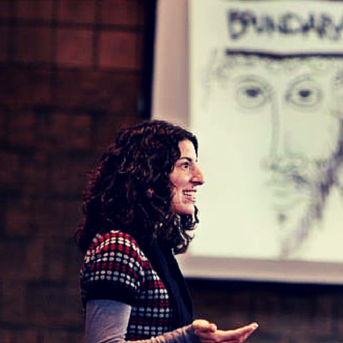
The new December issues of Christianity Today is out, and this month’s question in the “Under Discussion” column is “Should churches copyright their name?” I give my two cents in a few brief sentences. Go grab one and see what you think!
The Promise of the Messianic Child
by danielle on November 28, 2011
Hope all of you had a good Thanksgiving! Moltmann Monday is back with an excerpt from a Theology Today article on children, childhood and hope. Here’s a snippet:
The child, whose birth and whose future reign of peace devoid of violence and war Isaiah announced (chapters 9,11), is the “Son of David.” He is a descendant of David, endowed with the dignity of the chosen King David. Just as David conquered Jerusalem, making it the capital of Israel, the future “Son of David” will redeem Israel (from the Babylonian exile) and will rebuild Jerusalem. Most important, the coming “Son of David” will fulfill the prophet Nathan’s ancient promise to David: “I will raise up your offspring after you, who shall come forth from your body, and I will establish his kingdom forever.” (2 Sam 7:12-13) The promised “Son of David” is the messianic king for which Israel is hoping.
The hopes placed upon him do, however, explode all (historical) limits: “he will raise up the poor of the land,” he will “bring justice to the peoples,” and he will sow peace between humans and animals: “The wolf shall live with the lamb, the leopard shall lie down with the kid, the calf and the lion and the fading together, and a little child shall lead them” (Isa 11:1-11). While this messianic hope exceeded all of life’s experiential limits, it was conceived during the time of the Babylonian exile, at Israel’s “ground zero.” From the very beginning, it was part of Israel’s traditions of hope. [Abraham and Sarah's] promise brought into history an orientation towards the future, replacing the eternal return of the same in nature religions. Children were no longer merely included in the powers of origin through the veneration of the ancestors, but the generations were now aligned towards children as the carriers of hope and as signs of the steadfastness of the God of promise.
The hopes placed on the messianic child explode all limits. I love the imagery that conjures in my head, like an electric wire exploding from too much energy and making a fireworks show that lights up the night. I also appreciate that these hopes are beyond rational, really. They are not something most people walk around and assume. To have Advent hopes means to be willing to explode our limits of what is possible. Through this one promise, this one vulnerable human child, the whole world carries a new kind of hope for the future.
Moltmann on Seminaries, Privatization, and Marketing
by danielle on November 14, 2011
In honor of Patheos’ ongoing conversation of posts on the future of seminary education, today’s Moltmann Monday excerpt comes from God for a Secular Society in his chapter “Theology in the Modern University.” He’s been describing how theological faculties began as central and primary to the university when there was a religion of the state, but since the Reformation there has been an uneasy separation that has grown in isolation over the years until now we find ourselves in a multifaith society where only “religion departments” preside in universities and theology is relegated to privatized spheres of faith in seminaries. What that says for theology’s scope is rather grim. Here’s where he gets good and soapbox-y:
The privatization of religion has as its presupposition its de-politicization and as a consequence its marketing. What is called modern multifaith and multicultural society is nothing other than the total market society. Religions and cultures are on display in this market in just the same way as political options, commodities and services. Religions become the spiritual services on offer in the religious supermarket of the modern world. Individual religious liberty is certainly a powerful protection for every person’s own human dignity, but because of the typical Western concept of the consumer’s freedom to choose or dispose, that same freedom has turned religion into a commodity, where the customer is allegedly always right. Marketed religions take on the characterisitcs of goods on sale…
In the multifaith consumer society, peace reigns between the religious communities. That is a fact. But this religious peace is achieved through the political shut-down on religion, its privatization and marketing- not through recognition and esteem, but by reducing religion to insignificance. One does not have to be a fundamentalist to see this as practiced atheism.
This quote isn’t in reference to any particular post in that Patheos conversation, but I believe it’s an important discussion for those considering the future of the seminary. If the C/church is currently becoming locked down and even pigeonholed into a market-based enterprise in a multifaith world, what does that mean for how we prepare students and pastors? Where is the prophetic voice inside those competing forces and what is it saying? If a church doesn’t want to live as isolated as its seminaries, nor as marketed as the mall nearby, what kind of creative space must it find? How can we differentiate between the “peace” of insignificance and the peace of shared life?
Moltmann on Meditation
by danielle on November 7, 2011

Happy Moltmann Monday, y’all! Today’s excerpt comes from The Spirit of Life in his chapter on the theology of mystical experience. I’m giving you the first few sentences for context, but pay attention to the last half particularly.
The Greek philosophers, the [parents] of the Church, and the monastic Fathers comprehended things ‘with their eyes’. They ‘theorized’ in the literal sense of the word (theoreiz in Greek=to look at). We really arrive at understanding when we go on looking at a flower or a sunset or a manifestation of God until this flower is the flower per se, and this sunset is the sunset, and this manifestation of God is wholly God and nothing but God Godself. Then the observer becomes part of the flower, or part of the sunset, or part of God. For through his perception he participates in his object or counterpart, and is transported into it. The act of perception transforms the perceiver, not what is perceived. Perception confers communion. We know in order to participate, not in order to dominate. Theat is why we can only know to the extent in which we are capable of loving what we see, and in love are able to let it be wholly itself. Knowledge, as the Hebrew word (yada) tells us, is an act of love, not an act of domination. When someone has understood, he says: ‘I see it. I love you. I behold God.’ The result is pure ‘theory’, and pure good-pleasure.”
You’ve likely heard me say before I’m not a contemplative. I won’t get into a passionate discussion of why here; suffice it to say I have a hard time sitting around trying to zone out. I have a hard time thinking that is in any way Christian. (Okay, I got into my discussion a leeeeetle bit.) However I’m trying to learn, and stretch myself into the uncomfortable territory that is the great mystical Christian tradition. And I am learning that it is not a zoning out, but a honing in. It is not a removal from the world, but an immersion into the world at the deepest level. This is why I love the phrase “perception confers communion.” That phrase makes me want to practice meditation daily, just for the hope that I can get a taste of that happening in me. It is when we return to that feeling of being transported into something so much bigger and wider and more loving and present and real, which is to say, being transported into the presence of God. You have to set your intention to be present to it, but you can’t go there like you walk to the store. You have to be lifted, transported there. You have to set yourself in such a place that you can be carried into it.
And it doesn’t carry you away. It carries you in and with. It confers communion. And isn’t that our goal?
Announcing the 2012 Emergent Village Theological Conversation
by danielle on November 5, 2011
Hot off the presses, here’s the info! I will be there- not only for the good conversation and time with friends but also for the warm California sunshine! I hope to see you there!
Nancey Murphy, Dallas Willard, Jurgen Moltmann, Miroslav Volf, Walter Brueggemann, John Caputo, Stanley Hauerwas. In the past decade the Emergent Village Theological Conversation has been held with the world’s foremost theologians, bringing robust conversation alongside the practice of ministry and the work of the church. This year, we are thrilled to partner with the Claremont School of Theology and Process and Faith to add to that list process theologians John Cobb, Philip Clayton, Bruce Epperly and others. We will engage and explore the dynamic conception of the living and life-giving God and it is our belief that a progressive, missional, holistic, and radically relational theology with legs will emerge. As always, we will partner these theologians with on-the-ground pastors and practitioners to ensure a fruitful and helpful dialogue for those of us in the trenches.
As always, SPACE IS LIMITED. You won’t want to miss this conversation, so register soon!
Click HERE to register.
When:
Jan 30 – Feb 2, 2012
Where:
Claremont School of Theology
1325 N. College Ave.
Claremont, CA 91711
Price:
$99 until 12/31/11
$119 after that
Moltmann on Church Reform
by danielle on October 31, 2011
Happy Halloween, all! Today’s Moltmann quote comes from The Church in the Power of the Spirit in a section about the form of the church as fellowship on page 317:
The church will not overcome its present crisis through reform of the administration of the sacraments, or from the reform of its ministries. It will overcome this crisis through the rebirth of practical fellowship. The reforms of evangelization and the administration of the sacraments, and the inescapable reform of the church’s ministries, will spring from the rebirth of fellowship and friendship among the rank and file. The one certainly cannot take place without the other, but the starting point lies in the congregation and its form as fellowship. Fellowship in word and sacrament, fellowship in the profession of faith, fellowship in the institution and the hierarcy, become lifeless and are petrified into formalities with which people can no longer identify themselves, if fellowship among the congregation’s rank and file is lost, and if friendship is not recovered from the ‘grass-roots.’”
I like this section for at least two reasons. One, I confess that I just might explain my entire task as a pastor of an emerging community of faith by saying it is an attempt at rebirthing practical fellowship. What I mean by that is we try to structure our communal life in such a way that it gives us the tools and practices we need to become who we think we ought to be becoming. What I also mean by that is participation in the life of the community itself is a practice, because if you stick around long enough you will have to endure some conflict, or personality issues, or differences of opinion, and it’s in those moments where the fellowship can really give way to practical Christian life application. (Not to make it sound like a title on the front cover of a trendy new Bible) If we want to reform, there’s no shortcut. It’s a lot of practice, every day, with the same people, continually seeking those places of growth and grace. The hidden shadow-point Moltmann makes here is that the church can be a place where practical fellowship is less than fully present…a gauge which we should take seriously if we’re pastors.
The second reason is that I believe firmly in the power of friendship. I believe firmly in its transformational power, to put it more strongly. It’s why I continue to give my time and energy to the work of Emergent Village. It’s why I believe in keeping intentional friendships with other clergy across a number of denominational lines. It’s why I enjoy hanging out with people whose thoughts vary greatly from my own. Reform happens in, with and through friendship. It’s true personally, and it’s true communally.
Children, Youth and A New Kind of Christianity
by danielle on October 27, 2011

If you haven’t heard, there’s a great event coming up this spring. I’ll be there, and I’m excited to be able to learn and share ideas as a pastor and mom who cares deeply about the way we are raising our children in faith. Here’s some info, from their website:
This isn’t your average children’s and youth ministry conference!
Something is happening in the church. A new kind of Christianity is taking root and growing across the globe. New forms of ministry, worship, and community are emerging. Questions are being asked. And change is happening.
But amidst these changes and shifts, children and youth are being left behind. Innovative approaches to ministry with adults are emerging around the world, but little critical reflection and attention has been given to how to nurture young people within a new kind of Christianity.
In May of 2012, leaders, ministers, volunteers, parents, and students will gather in Washington, DC, USA to spark conversations about youth and children within a new kind of Christianity. They will talk about innovative practices, critical issues, and controversial topics like violence, racism, interfaith dialogue, and sexuality. They will embark on a journey together to engage in life-giving ministry with young people. And they will blaze a new trail for the 21st-century church.
You can find out all the important information- how to register, who’s speaking, etc.- at their website. ALSO, registration is going up from $169 to $189 on November 1st, so hurry if you want to get the best deal! I hope to see you there!
One down, one more to go…
by danielle on October 24, 2011
Good news awaits us this morning from the pastor of Mars Hill Sacramento. Over the weekend they spoke with pastors of Mars Hill Seattle and are in the process of working things out. You can read all the details on Pastor Scott Hagan’s blog. The short recap is this: MH Sacramento received the cease and desist letter with 2 weeks to change their name and logo and website. They responded with a letter to the lawyer (by request that communication go there rather than the church), in which they suggested a church-to-church conversation. They did not hear from MH Seattle. A pastor friend blogged about the situation, it went viral, and MH Seattle called over the weekend. MH Sacramento is going to keep their name, and they are now in the process of creating a new logo, etc. All matters have been settled out of court, and both parties seem to be reconciled.
This is the reason we are called to work conflict out together rather than in court. The purpose of the legal system is to exact punishment, while the purpose of the Kingdom is to bring about reconciliation. The process of reconciliation requires truth-telling from all sides. It requires us to call one another to the carpet in a plea to our better selves. However MH Seattle got to the reconciliation table, I’m glad for it. How good and pleasant it is when we live together in unity…especially after a spat. So that’s one for the win column.
NOW, if we could only get all of the copyrighting/trademarking churches to divest themselves of the desire to be known and use that time, energy and advertising money to pursue the Kingdom instead, that would really be something. It will take more than a few phone calls over a weekend and a rather large amount of courage, but I will throw a PARADE of joy through downtown Dallas if any religious corporation decides to return to being a church.
About Danielle
Danielle is the pastor of Journey Church in Dallas and author of The Boundary-Breaking God: An Unfolding Story of Hope and Promise. She speaks often on issues of theology, church leadership and emerging communities of faith.
Links
My Twitter Feed
Follow me on Twitter
Preaching in Community
A bi-weekly column I write at Patheos.com
Tags
Follow @DGShroyer on Twitter
Archives
- April 2012
- March 2012
- February 2012
- January 2012
- December 2011
- November 2011
- October 2011
- September 2011
- August 2011
- July 2011
- June 2011
- May 2011
- April 2011
- March 2011
- February 2011
- January 2011
- December 2010
- November 2010
- October 2010
- September 2010
- August 2010
- June 2010
- May 2010
- April 2010
- March 2010
- February 2010
- January 2010
- December 2009
- November 2009
- October 2009
- September 2009
- August 2009
- July 2009